Wednesday, 19 June 2013

Those dreaded deadlines - WriYe

The Looming Doom - Deadlines
We've all had deadlines to face - whether it be yearly like WriYe, monthly like NaNo, or weekly like LWS. How do you face your deadlines? Any advice to help meet them? Any advice on what to do when you miss them?

I find that deadlines come in two varieties - ones that are very soon and ones that are a while away. Once I know when something is due I can handle it appropriately.

• I make a list of what I need to do - the overall target and any smaller parts of that task. For example, if I have a story to write then completing the story is my overall goal and to do that I have to complete so many chapters or words. If it's for submission somewhere then it will also need proofreading for spelling and typos, then editing, then proofreading again.
• Make the targets realistic. I am not going to be able to produce a 10k story in a week if I have meetings every night and I'm working a full time job. However, I could probably produce a 250 word piece of flash which would only require me to find 30 minutes of writing time each day instead of three-plus hours. If you consistantly set targets that you don't hit then it's easy to get demoralised.
• Finally, once all the lists and targets are set out, prioritise what needs doing first and be prepared to move things around if necessary. If you're writing to meet a deadline for a competition you really want to enter, it's going to be more important than the poem you've had kicking around for the past month that's just for fun. And the school project that has to be in at the end of the week has to take precidence over the competition entry, because sometimes life gets in the way of writing.

Tuesday, 18 June 2013

My favourite children's books


As you know, I love children's books, both as a writer and as a reader. In my opinion, the best children's stories are those that stick with you into adulthood and have the ability to transport you back to your childhood when you reread them. This is a selection of some of my favourite children's stories with the reasons why.
 
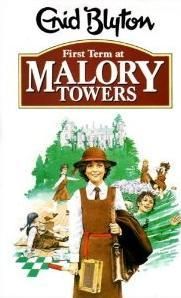
The Malory Towers series by Enid Blyton
Enid Blyton comes in for a lot of stick as a writer, but I've always enjoyed her stories. They are simple, fun, and have some likeable characters even if the stories lack depth and are, in some critics' opinions, terribly written. My favourite series by Enid Blyton is the Malory Towers series. I went to a girls' school with a brown uniform myself, so I think it was always a bit of an escape for me into somewhere that was sort of the same as my own life but much more exciting.


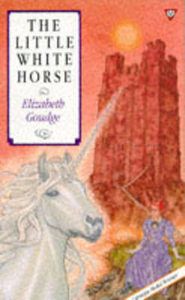
The Little White Horse by Elizabeth Goudge
This is one of my all-time favourite books. I got this when I was about eight, and I loved reading all the descriptions of Moonacre and the people living there. It was a Carnegie Medal winner in 1946 and apparently was J.K. Rowling's favourite book as a child, but more importantly than that it's a wonderful story that mixes fantasy, history, romance and a little but of religion in a fantastic book that I would recommend to anyone.


Ronia the Robber's Daughter by Astrid Lindgren

Ronia was one of the books my mum read to be as a bedtime story. I particularly remember it because it was the first book that she was reading to me that I snuck out and read ahead once it got to the exciting bits. I haven't read it since I was seven or eight, but three parts particularly stick in my mind - the part where Ronia and the boy are leaping across the gap at the top of the tower, the part where Ronia gets her foot stuck in a hold and the creatures that live there come out and demand 'Woffor diddun do it?', and the part where Ronia is exploring the corridors underneath the tower.
Just thinking about it is making me feel nostalgic - I may have to go and have a look on Amazon to see if I can find it again.

Monday, 13 May 2013

Purple Prose - WriYe

The Most Flowery of Language - Purple Prose
Okay, so what do you consider to be purple prose? What is it? Give us an example. Do you love it? Hate it? Find it tolerable or small doses? Or do you think all shades of violet wording should be destroyed?


Again, lots of questions to answer this month!

Okay, so what do you consider to be purple prose? What is it? Give us an example.

The word that springs to mind is 'flowery' - lots of descriptive words or decoration of plain text. It's what turns a woman sitting on a bench on a lawn into a seat with rustic wooden slats worn smooth by years of use as the woman with long, blonde hair, highlighted by the sun, sits there reading well-worn pages of letters, her bare feet in the bright green mown grass, the blades tickling her toes. That's actually not flowery enough really. It should also have smells, colours, and the way the sunlight falls through the nearby trees on to the grass.

Having said that, another description I've seen for purple prose is that it 'consists of words and phrases that sound stilted, overly descriptive, or cliché and is derived from a reference by the Roman poet Horace.'


Do you love it? Hate it? Find it tolerable or small doses? Or do you think all shades of violet wording should be destroyed?

Lots of people will say you should always avoid purple prose, but I like it when it's in the right place. If it's just description for description's sake then it annoys me, but when it's used to set a scene, or when a whole story is about the descriptions, then I do really enjoy reading it. I'm reading Affaire Royale by Nora Roberts at the moment, and her descriptions I think really do go as far as purple prose. She paints a wonderful picture of her settings which can often stretch to a page at a time, but they're always tied in with the story and not just there for the sake of it. She can really make you feel as though you're there in the story with the characters, and I think the main reason for that is the way she describes things - she uses colours, feelings, weather, what things are made of and how they interact to paint wonderful scenes.

Thursday, 9 May 2013

Review: Lessons in French by Hilary Reyl

Rather like The Devil Wears Prada, Lessons in French follows the story of a young woman in her first job in a big city, working for a vaguely eccentric, very talented and exceptionally demanding boss.

Set in 1989 as the Berlin Wall is about to come down, the story is about Kate, fresh out of university in the US and about to start her dream job as a ‘little-bit-of-everything’ in Paris for the world-famous photo-journalist Lydia Schell.

Once set up in her tiny rooms - for which she has to pay rent out of her meagre salary - Kate has to deal with the eccentric Schell family – grouchy teenager Joshua, delicate princess Portia, distracted husband Clarence and flighty Lydia – while juggling her love life (Portia’s ex-boyfriend Olivier), friends (down-to-earth Christie, over-emotional Claudia and gay cousin Etienne), and trying to figure out exactly what she wants from life.

I found it easy to lose myself in the story, which brought the streets of Paris and the eccentric characters vividly to life, and Lessons in French would make a great summer holiday read for someone wanting a light hearted story to put in their bag and take to the beach.
  • Lessons in French by Hilary Reyl
  • RRP £7.99 (paperback)
  • Published by Harper (this edition due to be published May 23, 2013)
  • ISBN-10: 0007446268
  • ISBN-13: 978-0007446261

Wednesday, 8 May 2013

A to Z Challenge Reflections Post

A short reflection on last month's challenge.

What did you enjoy about the Challenge? 
It got me blogging and made me think - it's not easy trying to find an X to write about!

What could we do better next year? 
I enjoyed it as it was - I don't think there was anything that would have improved it. I liked the challenge and the idea of visiting other people's blogs, and beyond that I don't think there needs to be anything more.

What issues did you encounter? Did you encounter many non-participants?
On a couple of blogs I went to I couldn't find a link to post a comment, which was frustrating! I didn't find any non-participants though, aside from one who had posted until about half way through the month and then posted an apologetic message explaining she wasn't going to be able to do the rest.

Theme or no theme – what seemed to work better? Did you find any great themes? 
I liked the themes but I didn't really look at any posts which weren't to do with writing, because that was what I was most interested in. I found some great blog posts under the writing theme though.

Did you have fun and will you participate again next year?
Yes and yes :)

Tuesday, 30 April 2013

Z is for Zzzzzz

This is a very short post today because I'm not feeling well, sorry.

Okay, so I couldn't think of a suitable Z, but Zzzzzz will do!

Sleep, or at least rest, is very important to help replenish the creative juices. When you're tired you can't think properly, so in that way sleep is essential for recharging the batteries and resparking the imagination. I've also had ideas for stories inspired by dreams, so sleep can also act as inspiration.


Thanks for joining me on the A-Z blogging adventure :)

Monday, 29 April 2013

Y is for Young Adult

Twilight, The Hunger Games, Uglies, Harry Potter (or at least the later books) and Northern Lights have all been classed as Young Adult fiction or Crossover fiction. Since I would class a lot of what I write as YA fiction it's something I'm interested in, even if the classifications are sometimes confusing.

I wrote an essay for an OU course on crossover fiction recently. Here's an excerpt:


Changes in society mean that children tend to grow up quicker than they did 100 or even 50 years ago, and so they become interested in older themes sooner. With these changes and with crossover fiction becoming more popular in recent years, this could mean that the way that children’s literature is classified has changed. Depending on the point of view, it could be seen as having expanded, as crossover and young adult fiction could be seen as part of children’s literature and have therefore expanded the age range of readers; or it could be seen to have shrunk children’s literature as by the time children reach secondary school they are reading crossover and YA fiction and no longer reading children’s books.

Certainly the classification of stories would now seem to be children’s stories for very young children, early readers, juniors, and then crossover, young adult and adult, rather than the age-specific range of children’s stories which used to be the classification system even 30 years ago. However, you could also argue that crossover fiction has been good for children’s literature by bringing it to a wider audience and making more books available to younger and older readers by classifying them as crossover.
Crossover fiction, essentially, is something that's written for one age range that is read widely by that age range and another different age range. For example, Harry Potter was first marketed as a children's book, but gained a lot of adult readers and so is also now classed as crossover fiction. The later books in the series touched on more adult themes, so I wouldn't say they were children's books, but they were designed for teenagers - the age range which young adult fiction is aimed at. But because they were also still read by adults as well, those books were crossover and young adult.

An argument could be made that all YA fiction is crossover, because it will be read by younger and older readers than it is aimed for; but not all crossover fiction is YA. Confused yet?!